By Brooke Kelly
This rhetorical analysis essay was originally written for a Rhetorical Theory class.
Watergate?
In the roughly two-hundred and fifty years since our founding fathers signed the Declaration of Independence, only one United States president has resigned from office, failing to complete the term to which he was elected, and that was President Richard Nixon. In 1974, President Nixon delivered his resignation speech following the release of Oval Office tapes directly implicating him in the Watergate scandal. In this speech, Nixon announced his decision to step away from the presidential office and that his resignation would be official the following day at noon, when then-Vice President Gerald Ford would be sworn in to replace him.
In his televised speech, Nixon only briefly touches on the Watergate scandal, and he, notably, does not apologize or admit guilt for any part of the Watergate break-in or the following cover-up. After the release of Oval Office tapes directly implicating Nixon in these crimes, the public–and the United States Congress—was fully aware that Nixon didplay a part in the now infamous Watergate scandal. Quintilian argued that strong rhetoric was a good man speaking well, but at this point in his career, Nixon had lost any appearance of being a “good man”. With a calm, yet saddened demeanor, Nixon is not trying to deny involvement in or confess to any crime; the former president is merely trying—and failing—to save what is left of a positive legacy for himself.
Covering Up
In his speech, Nixon is not simply announcing his resignation. Nixon leans into Quintilian’s ideas in his speech by attempting to change public perception of himself to be that of a good man. When declaring his resignation, Nixon speaks in a very particular way as he addresses the reason he has chosen to leave the Oval Office. Nixon says, “[I]t has become evident to me that I no longer have a strong enough political base in the Congress to justify continuing” (Nixon, 00:25 – 00:31). By phrasing his logic in this way, Nixon is denying that his resignation has to do with his involvement in Watergate, and he is reframing the events to focus more on Congress’ reaction to the Watergate hearings and Nixon’s lack of support within Congress. Nixon also skirts around the reality that if he had not resigned when he did, it is most likely that the United States Senate would have voted to remove him from office following his impeachment in the House of Representatives.
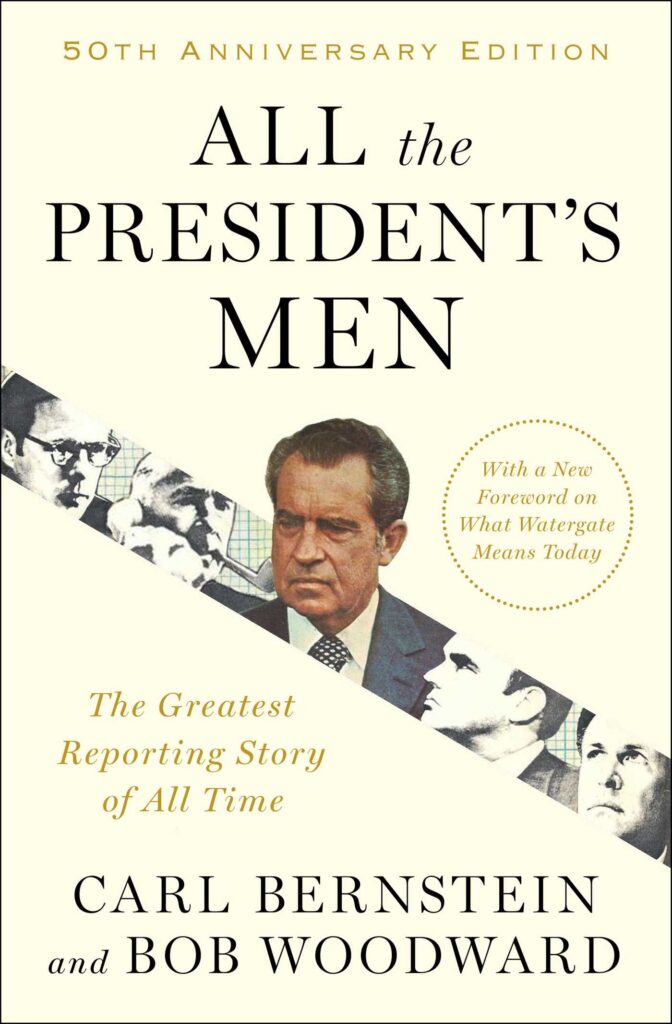
By declaring his resignation in this way, Nixon also makes himself more sympathetic to the American people, claiming that “the interest of the Nation must always come before any personal considerations” (Nixon, 01:31 – 01:36). Unfortunately, this claim falls flat because Nixon was, essentially, forced to resign or face removal from office. In a foreword to the fiftieth anniversary edition of All the President’s Men, Senator Barry Goldwater of Arizona claims that the day before Nixon announced his resignation, a meeting took place in the Oval Office in which Nixon and a few Senators discussed Nixon’s potential removal from office. To continue his presidency, Nixon needed thirty-four senatorial votes in his favor. Goldwater told the president, “There aren’t many who would support you if it comes to that. . . I couldn’t find more than four firm votes” (Bernstein and Woodward, xxvi). At the end of the day, it is clear that Nixon’s resignation was simply to take control over the swift end of his presidential term.
Obvious Lies
Contrary to Quintilian’s views on rhetoric, the Sophists of the ancient word used rhetoric as a tool to alter reality, or the perception of reality. According to a Sophist line of thinking, a great rhetor is one who can make anything sound correct. Nixon’s resignation could most certainly be read through a Sophist eye, and maybe it is effective in protecting his public image and legacy under this lens. However, Nixon’s character was already smudged in the eyes of many Americans, and audiences do not take kindly to being lied to.
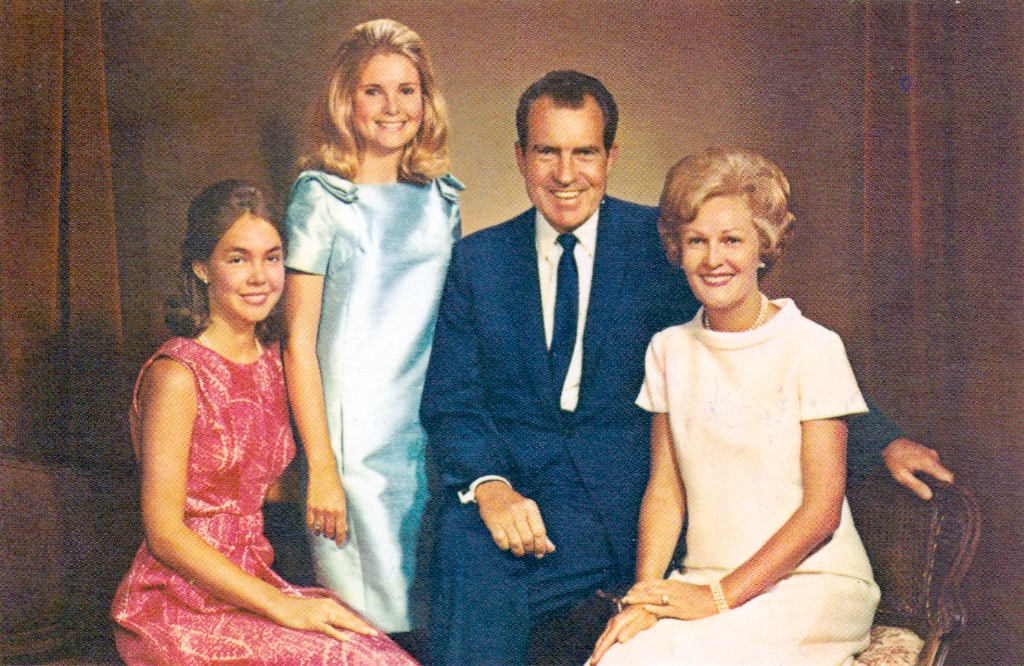
It is hard not to feel some compassion for the former leader of the free world as he calmy, solemnly addresses the nation, especially when he brings up his family, his love for the nation, and some of the major accomplishments from his time in office. Perhaps, if Nixon’s trial had not been televised, if his character had not been questioned so publicly, this resignation speech could have been very effective. Unfortunately for President Nixon, anyone with knowledge of the Watergate scandal and Nixon’s secrecy and lust for power would not be moved or convinced by this speech. Nixon’s legacy had already been besmirched, and there was no saving himself after his citizens and Congress had decided that he was not a good man.
Works Cited
Bernstein, Carl, and Bob Woodward. All the President’s Men. Simon and Schuster Paperbacks, 2022.
Nixon, Richard. “President Nixon’s Resignation Speech”. YouTube, uploaded by CBS News, 5 August 2014, www.pbs.org/newshour/spc/character/links/nixon_speech.html.